Bulk deliveries and fuel cards
Delivery dockets and card exports are uploaded to the site that used the fuel. A docket with a missing quantity stays visible with its reason, so it isn't lost from the year.
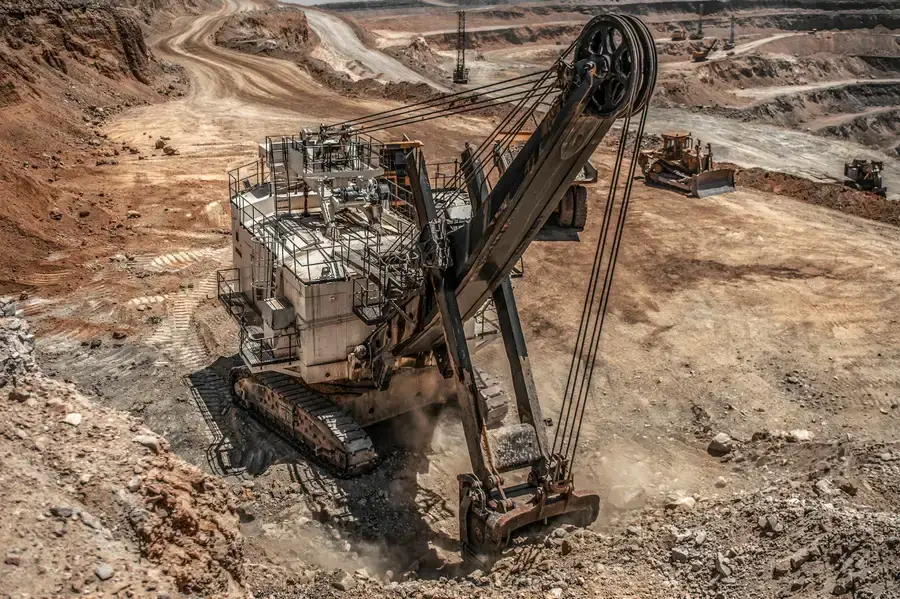
Haul trucks, generators and excavators run on bulk diesel. Emitt totals each site's deliveries and fuel cards, prices them with the NGA Factors, and builds the facility tables you prepare an NGER report from, with the docket behind every figure.
For a mining business the questions are often regulatory: NGER once a facility or the corporate group crosses a threshold, and AASB S2 climate reporting, which captures every company with NGER reporting obligations.
These are the combustion, electricity and refrigerant sources Emitt prices today, and how each reaches it. Scope 3 is reported apart from the Scope 1 and 2 headline.
| Emission source | Scope | How the data reaches Emitt |
|---|---|---|
| Bulk diesel for haul trucks, excavators and generators | Scope 1 | Delivery dockets uploaded as a spreadsheet |
| Diesel and petrol in light vehicles | Scope 1 | Fuel card export (Ampol Card today; BP Plus and Shell Card coming soon), or spreadsheet upload |
| Natural gas for processing or power | Scope 1 | Gas bill or meter figures, uploaded in the template or entered by hand |
| LPG | Scope 1 | Supplier invoices, uploaded in the template or entered by hand |
| SF₆ in high-voltage switchgear, HFCs in site air conditioning | Scope 1 | Service records of the gas added, in kg, uploaded or entered by hand |
| Grid electricity, including the Pilbara (WA NWIS) and Darwin-Katherine (NT DKIS) systems | Scope 2 | Bills from any retailer, in the spreadsheet template or entered by hand |
| Waste to landfill | Scope 3 | Waste contractor docket reports (CSV) |
| Contractors' and suppliers' own emissions | Scope 3 | A supplier link: each one reports their own figure, no account needed |
What Emitt doesn't calculate for mining. Fugitive emissions from coal seams and oil and gas operations, emissions from explosives, process emissions from ore processing, land clearing, and Safeguard Mechanism baselines. Electricity generated on site isn't priced as electricity: the diesel or gas burnt in the generators is counted as Scope 1 fuel instead. Fuels are priced at the national rates in the NGA Factors, not from site-specific fuel analysis.
Each site holds its own deliveries, cards, meters and totals, rolling up to the company the way NGER sees it.
Delivery dockets and card exports are uploaded to the site that used the fuel. A docket with a missing quantity stays visible with its reason, so it isn't lost from the year.
Structure the business the way NGER sees it: each facility with its own totals, rolled up to the company. You decide what counts as a facility; Emitt keeps the totals apart.
Facility energy and emissions tables to prepare an NGER report from, with every figure linked to the docket or bill behind it. Nothing is submitted to the Clean Energy Regulator.
A Pilbara site on the North West Interconnected System and one on the Darwin-Katherine system each get their own factor: 0.56 and 0.55 kg CO₂e per kWh in the NGA Factors 2026.
Multiply the delivered kilolitres by the diesel factor: 286.0 kL × 2,709.72 kg CO₂e per kilolitre in the NGA Factors 2026 = 774,979.92 kg, or 774.98 t CO₂e of Scope 1.
Each docket stays attached to the figure it made, so the site's month traces back to the deliveries behind it. Try your own figures in the emissions calculator.
No. Emitt prepares facility energy and emissions tables to build an NGER report from, with the evidence behind each figure. You or your adviser lodge the report with the Clean Energy Regulator, and Emitt does not decide whether a threshold is crossed or what counts as a facility.
No. The Safeguard Mechanism applies to facilities with more than 100,000 t CO₂e of covered emissions a year, and Emitt does not calculate Safeguard baselines or prepare Safeguard reporting. An admin can export a site's records, each with its calculation and its source file listed, for the advisers who do.
No. Emitt calculates emissions from fuel combustion, electricity, refrigerants and SF₆, and records Scope 3 from waste and supplier reports. Fugitive emissions from coal seams and process emissions need to be estimated outside Emitt.
We're onboarding a small number of Australian businesses in the beta. Bring last year's bills and fuel card exports, and we'll set you up with your own data on the first call.