Farm fuel and machinery
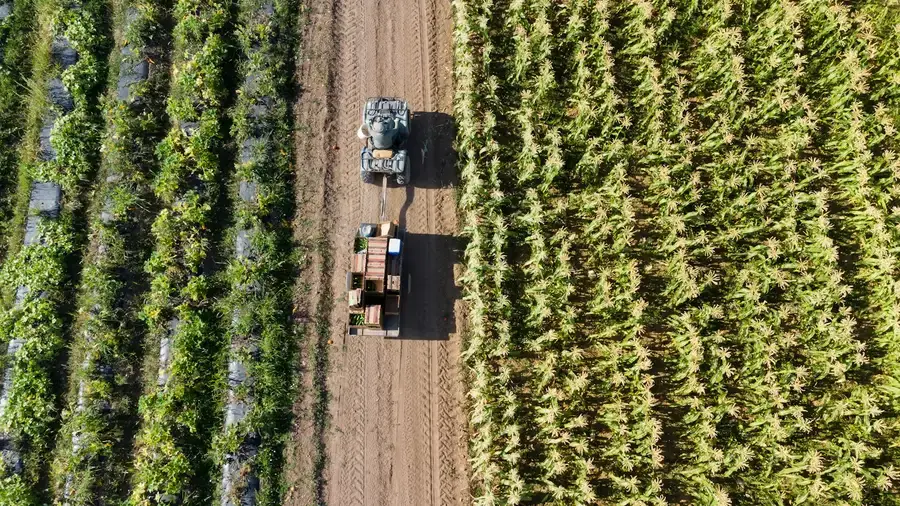
Diesel and petrol for tractors, pumps and vehicles, from fuel cards or delivery dockets, each landing against the property that used it.
Emitt covers the energy and fuel side: farm diesel, irrigation and packhouse power, cool-room gas and refrigerants. They sit in one place with the bills behind each figure, and the retailer's sheet is built from them.
Mostly the businesses that buy from you. Supermarkets and food brands count the emissions in the food they buy as their Scope 3, so they ask processors, and processors ask growers.
These are the sources Emitt prices today and how each reaches it. Water is recorded too, without emissions, because buyers often ask for it alongside.
| Emission source | Scope | How the data reaches Emitt |
|---|---|---|
| Diesel in tractors, harvesters, pumps and generators | Scope 1 | Fuel card export (Ampol Card today; BP Plus and Shell Card coming soon), or bulk delivery dockets in a spreadsheet |
| Petrol in vehicles and small engines | Scope 1 | Fuel card export or spreadsheet upload |
| Electricity for irrigation pumps, packhouses, dairies and cool rooms | Scope 2 | Bills from any retailer, in the spreadsheet template or entered by hand |
| LPG for heating, drying and forklifts | Scope 1 | Supplier invoices, uploaded in the template or entered by hand |
| Natural gas for processing | Scope 1 | Gas bill figures, uploaded in the template or entered by hand |
| Refrigerants in cool rooms and cold storage | Scope 1 | Service records of the gas added, in kg, uploaded or entered by hand |
| Waste to landfill from packhouses and processing | Scope 3 | Waste contractor docket reports (CSV) |
| Water use | None (kL only) | Water bills, uploaded in the template or entered by hand |
What Emitt doesn't calculate for agriculture. Livestock emissions (enteric methane and manure), fertiliser and soil emissions, land use and land clearing, and carbon stored in soil or trees. For a grazing business, livestock methane is usually most of the footprint, so Emitt's figures are only part of the picture. Farm calculators built for Australian conditions, such as the University of Melbourne's Greenhouse Accounting Frameworks (GAF) tools, cover that side.
Each property, packhouse and plant can be set up on its own, so a buyer gets the figures for the site that supplies them.
Diesel and petrol for tractors, pumps and vehicles, from fuel cards or delivery dockets, each landing against the property that used it.
Electricity, LPG and refrigerants for processing and cold storage, each priced with the right factor: power against the state grid, refrigerant by the gas's global warming potential.
A retailer response sheet built from the same records, with the bills behind every figure. Water and waste packs come from the same ledger.
Set up farms, packhouses and the processing plant as your own tree. Each reports on its own and rolls up to the business.
Multiply the kilolitres of LPG by its factor: 12.4 kL × 1,557.42 kg CO₂e per kilolitre in the NGA Factors 2026 = 19,312.01 kg, or 19.31 t CO₂e of Scope 1.
The packhouse's electricity is priced separately, against the NSW grid at 0.60 kg CO₂e per kWh in the NGA Factors 2026. Try your own figures in the emissions calculator.
No. Emitt calculates emissions from fuel, electricity, gas and refrigerants, and Scope 3 from waste to landfill and supplier reports. Livestock, fertiliser, soil and land-use emissions need a farm calculator, such as the GAF tools.
Partly. Emitt builds a retailer response sheet from your fuel, electricity, gas, refrigerant and waste records, with the evidence behind each figure. Questions about livestock, fertiliser or land use need figures from a farm calculator.
It depends on what drives the pump. An electric pump on the grid is Scope 2, priced against the state grid it draws from. A diesel pump is Scope 1, counted from the fuel it burns.
We're onboarding a small number of Australian businesses in the beta. Bring last year's bills and fuel card exports, and we'll set you up with your own data on the first call.